

May 11, 2026 | Insights
LiDAR technology benchmarking made clear
Netscribes mapped sensing options, rivals, and entry routes so leaders could make better bets
A global automotive technology leader saw LiDAR heating up fast, but the field felt crowded and uneven. They needed a grounded view of what was working, what was still early, and where their own strengths could realistically fit.
Why this needed a closer look
LiDAR programs don’t fail only on engineering. They stall when teams can’t compare like-for-like performance, separate marketing claims from real readiness, or pick the right spot in the value chain. The client wanted LiDAR technology benchmarking that connected the tech choices to real business paths, not a list of specs.
What Netscribes delivered
We started with LiDAR technology benchmarking across sensing approaches at both component and system levels, so the client could see trade-offs clearly. Next, we assessed the competitive field—how key players were positioning, how mature their solutions looked, and where gaps remained.
To go deeper than product sheets, we examined patent activity to track where innovation was clustering and how quickly ideas were moving toward deployable systems. We also reviewed signals from collaborations, acquisitions, and start-up activity to understand how the market was forming around partnerships and platform bets. This brought automotive LiDAR market research and technical comparison into one storyline.
What the client walked away with
With LiDAR technology benchmarking as the backbone, we helped the client link their existing portfolio to specific integration paths in next-generation sensing stacks. They could prioritize the most realistic entry routes, identify partner types that made sense, and focus investment discussions on areas with clear alignment.
Turn your LiDAR questions into decisions
If you’re planning automotive LiDAR market research or evaluating where to play, Netscribes can support LiDAR technology benchmarking, competitor evaluation, and patent-led innovation scanning—explore our Information and Communication Technology (ICT) & Media solutions. Download the case study for details.
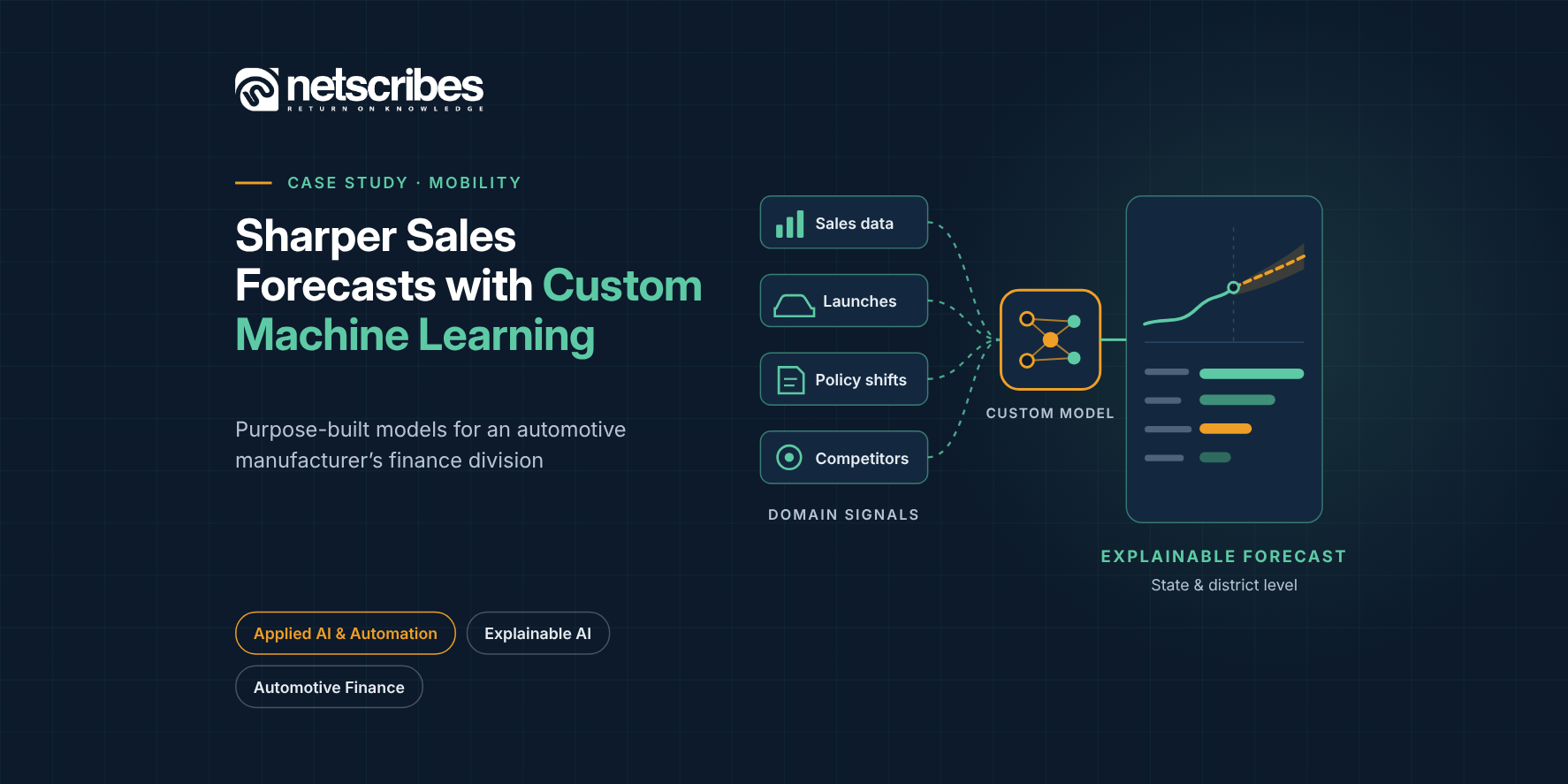
Innovation
Custom Machine Learning for Sharper Sales Forecasts for an Automotive Manufacturer

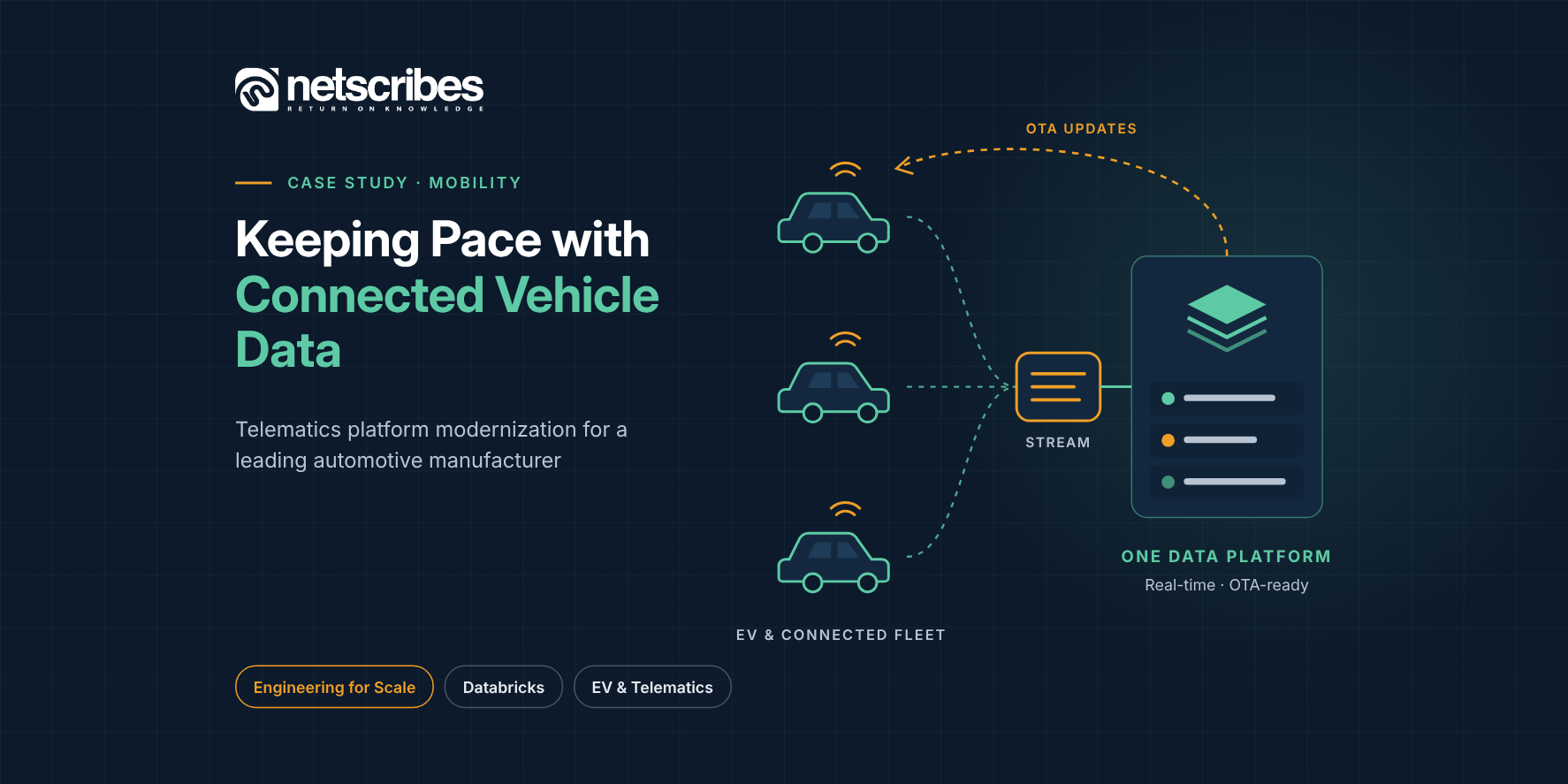
Engineering
Keeping Pace with Connected Vehicle Data: Telematics Platform Modernization for a Leading Automotive Manufacturer
We respect your privacy. You may unsubscribe anytime.Privacy Policy.